Call
Patient Enquiry
Professional Enquiry
London Oculoplastics is a leading centre for the treatment of thyroid eye disease (TED). Based in London and led by one of the UK’s most experienced oculoplastic surgeons, Mr Uddin, we provide expert medical and surgical care for patients with mild to complex forms of TED.
Mr Uddin has over 25 years’ experience managing thyroid eye disease and has treated more than 5,000 patients using the latest medical and surgical approaches. He has performed over 1,000 orbital decompression procedures and is recognised as a key opinion leader in TED, having led and contributed to more than 10 clinical trials in this field.
We welcome patients at all stages of the condition – whether you’re newly diagnosed, seeking a second opinion or exploring treatment options to improve vision, comfort or appearance.
What is Thyroid Eye Disease?
Thyroid eye disease, also known as Graves’ orbitopathy or thyroid-associated orbitopathy, is an autoimmune condition that causes inflammation in the eye sockets. It is most commonly linked to Graves’ disease (an autoimmune disorder that increases production of thyroid hormones), but TED can also occur in people with an underactive or a regular functioning thyroid gland.
TED affects the tissues around the eyes, including muscles, fat and connective tissue, leading to changes in eye appearance, movement and vision.
Thyroid eye disease symptoms
TED affects people in different ways. Symptoms of thyroid eye disease may appear gradually or worsen suddenly, particularly during the active phase of the condition.
Common symptoms and signs of thyroid eye disease include:
- Swelling or puffiness around the eyes
- Bulging eyes (proptosis)
- Eyelid retraction (wide or startled appearance)
- Double vision
- Gritty, dry or watery eyes
- Pressure or pain behind the eyes
- Light sensitivity
- Blurred or reduced vision in more severe cases
What are the first signs of thyroid eye disease?
The first signs of thyroid eye disease often include irritation or dryness in the eyes, along with redness, swelling or puffiness around the eyelids. Some people notice a change in their appearance, such as a wide-eyed or staring look.
As the condition progresses, symptoms like bulging eyes, double vision or pressure behind the eyes may develop. Early signs can be subtle, so it’s important to seek specialist advice if you notice any changes.
At London Oculoplastics, we perform a full clinical assessment, physical examination of your eyes and visual tests. Identifying TED early is key to protecting your eye health and reducing the risk of long-term complications.
Stages of thyroid eye disease
There are three stages of thyroid eye disease:
- Early, active ‘wet’ phase – inflammation is at its peak, usually lasting between 6 and 18 months
- Mid, plateau phase – the disease is more stable but still active and may be responsive to medical treatment
- Late, ‘burnout’ or ‘dry’ phase – inflammation has settled, typically after 12 to 24 months
Treatment for TED depends on the phase of the condition and the severity of symptoms. Our team tailors your treatment plan based on the phase of your TED so you can find lasting relief.
With advances in understanding and the development of newer treatments, including disease-modifying therapies such as IGF-1 receptor antibody treatments like teprotumumab, care can be tailored to each patient’s specific condition and needs.
Thyroid eye disease treatment options
London Oculoplastics offers expert care at every stage of thyroid eye disease, ensuring you receive the treatment that’s right for you. We’ll guide you through your options and recommend medical or surgical treatment based on the current phase of your condition.
Medical treatments (active phase)
During the early or active phase of TED, treatment focuses on reducing inflammation, calming the immune response, relieving pressure behind the eyes and protecting your vision. In some cases, early treatment may also help limit or reverse changes in eye appearance.
Medical treatments for active phase TED can include:
- Steroid therapy – oral or intravenous (an injection in your vein) steroids help reduce inflammation and swelling
- Immunosuppressive/immunomodulation medication – newer treatments, including targeted medicines known as biologics, work by calming the immune system to reduce inflammation behind the eyes. One example is teprotumumab, which may be offered in selected cases where your thyroid eye disease condition is active and severe
- Anti-IL-6 receptor therapies – targeted treatments such as tocilizumab may be considered in selected cases
- Second-line immunosuppressive medication – options such as mycophenolate or azathioprine may be used where inflammation is more severe or resistant to initial treatment
- Orbital radiotherapy – low-dose radiation directed to the area behind the eye can help reduce inflammation and progression in many patients
- Topical medications – eye drops and ointments may help keep your eyes lubricated
- Thyroid control – keeping your thyroid hormone levels stable with the right medication is a key part of managing thyroid eye disease. Unbalanced thyroid levels can make symptoms worse and reduce how well treatments work, so careful monitoring and management are important
Surgical treatments (inactive phase)
Surgery is usually considered once the condition has stabilised and inflammation has settled for at least 6–12 months.
London Oculoplastics offers the full range of reconstructive and corrective procedures, such as:
- Orbital decompression – relieves pressure behind the eyes and reduces bulging. A tailored surgical approach is discussed for each patient and may include fat removal, lateral wall decompression using internal or external techniques, medial wall decompression through a conjunctival or endoscopic approach and, in selected cases, floor decompression
- Strabismus (squint) surgery – corrects double vision caused by repositioning the muscles in the eye
- Eyelid surgery – restores normal eyelid position, function and appearance
At London Oculoplastics, we take a personalised approach to each case of thyroid eye disease, combining advanced treatments with years of specialist experience to achieve the best possible outcome for every patient.
Contact our team to find out more about which TED treatment options might be right for you.
Thyroid eye disease before and after pictures
Seeing what treatment can do can help when you’re living with thyroid eye disease. Every person’s journey with TED is different, and treatment can help at different stages along the way. These photos show how treatment helped two people living with TED.
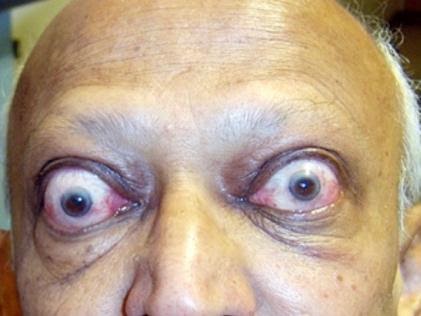
This is an example of a man living with severe, active TED in the early stages
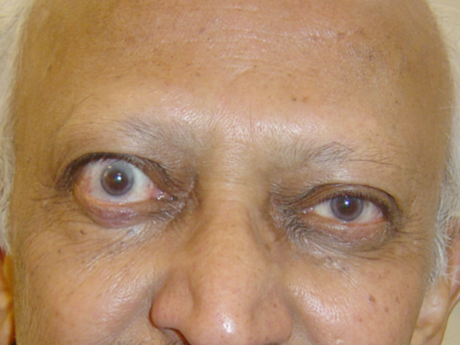
Following treatment with steroids and radiotherapy, his left eye returned to its usual position while his right eye more prominent
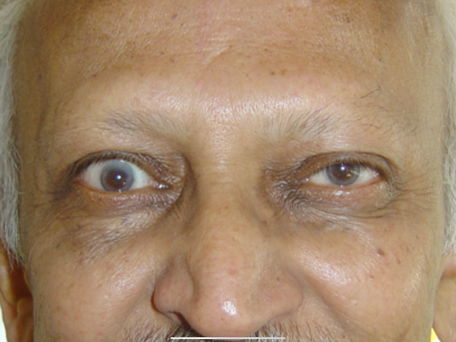
Following right orbital decompression, which helped achieve a good, balanced eye position, with ongoing right upper eyelid retraction
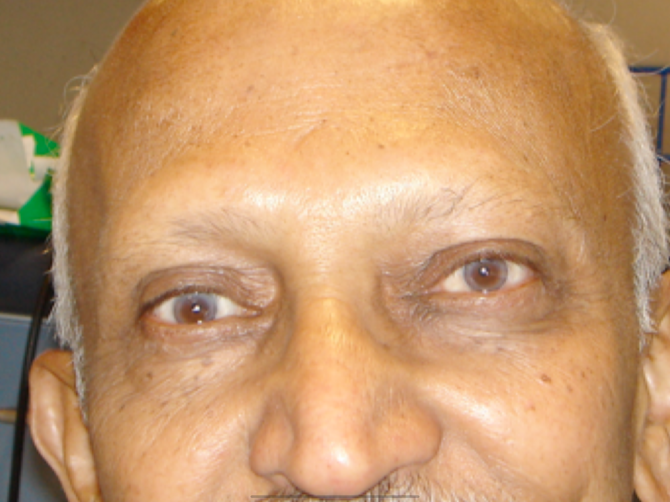
Following right upper eyelid lowering surgery

Following right orbital dcompression and treatment with botulinum toxin injection, which helped achieve a good, balanced eye position.
These examples show what treatment can help achieve. If you’re living with TED, speak to our specialist team about what options may help you, and when, on your own journey.
Why choose London Oculoplastics for your TED care?
London Oculoplastics is known for delivering expert, individualised care with consistently high standards and trusted outcomes.
When you choose us, you’ll access our:
- Specialist-led care – led by a senior consultant oculoplastic surgeon with over 25 years’ experience
- Trusted referral centre – based at Moorfields Eye Hospital, one of the world’s leading eye hospitals.
- Access to a multidisciplinary team approach – includes endocrinology, radiology, medical ophthalmology, ear, nose and throat (ENT) and pathology
- Tailored treatment plans – every patient receives an individualised plan based on their symptoms, thyroid status and goals
- Full treatment pathway – from diagnosis to advanced medical therapies and corrective surgery
- International reputation – we regularly treat patients from across the UK as well as international patients from Europe and the Middle East
Meet Mr Uddin – our thyroid eye disease specialist
Mr Uddin is a leading specialist in thyroid eye disease, with over 25 years of experience in treating this condition. He runs the TED clinic at Moorfield’s Eye Hospital, where 5,000 thyroid eye disease cases have been treated over 15 years. Mr Uddin has personally performed over 1,000 orbital decompression procedures in the last 25 years.
Mr Uddin supports the education, research and support of TED patients. He is a founding member and former President of the ITEDS (International Thyroid Eye Disease Society), original member of the award-winning TEAMed working group and past chairman and current Trustee of TEDct.
He’s also a Key Opinion Leader in TED, conducting over 10 clinical trials.
Your journey with London Oculoplastics
TED can have a significant physical and emotional impact. At London Oculoplastics, we’re here to support you throughout your diagnosis, treatment and recovery.
At London Oculoplastics, your journey begins with a thorough consultation, including a full clinical evaluation, review of any scans and a detailed discussion of your treatment options. If you are in the active phase of thyroid eye disease, we will create a personalised plan to manage inflammation and monitor your progress with regular follow-ups.
If surgery is needed, it will be carefully timed and planned to restore function, comfort and appearance once your condition is stable. Our care continues with long-term monitoring to help maintain results and support your quality of life. We also work closely with your GP or endocrinologist to help keep your thyroid levels well managed.
Book a TED consultation today
If you’re concerned about thyroid eye disease or seeking expert care, we’re here to help. London Oculoplastics offers trusted, consultant-led treatment in one of the UK’s most advanced eye care settings.
Ready to take the next step? Book a private consultation with London Oculoplastics and get expert support for thyroid eye disease.
Thyroid eye disease FAQs
We’re here to answer your frequently asked questions about thyroid eye disease.
Contact us
Moorfields Private Outpatient Centre
London (Central London)
Moorfields Private Practice
London (Central London)
Parkside Hospital